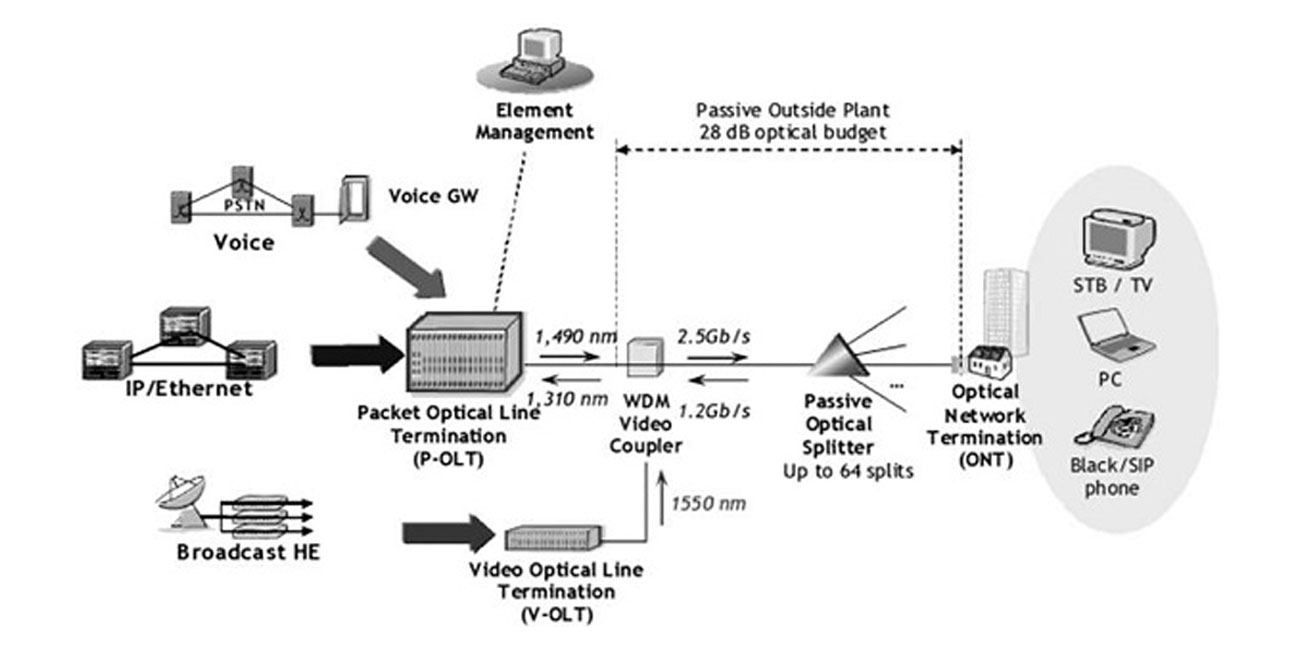
Revolutionizing Connectivity with FTTH & GPON
In today’s digital era, seamless and high-speed internet connectivity is essential for homes, businesses, and communities. Fiber to the Home (FTTH) and Gigabit Passive Optical Network (GPON) solutions
provide ultra-fast, reliable, and scalable broadband infrastructure, ensuring superior data transmission for all your communication needs.
What is FTTH?
FTTH (Fiber to the Home) is an advanced broadband technology that delivers fiber-optic communication directly to residential and commercial spaces. Unlike traditional copper or coaxial networks, FTTH
offers:
- Higher bandwidth for seamless streaming, gaming, and remote work
- Lower latency for real-time applications and VoIP services
- Improved reliability with minimal downtime and weather resistance
- Future-proof scalability to accommodate evolving digital demands
Understanding GPON Technology
GPON (Gigabit Passive Optical Network) is a cutting-edge fiber-optic technology that enables high-speed data transmission over a single optical fiber, efficiently distributing broadband services
to multiple users. Key benefits of GPON include:
- Gigabit speeds supporting data, voice, and video services
- Cost-effective network deployment with passive splitters reducing infrastructure costs
- Enhanced security through encrypted data transmission
- Energy efficiency with lower power consumption than traditional networks
Why Choose Our FTTH & GPON Solutions?
At Maslink infocom, we specialize in delivering end-to-end FTTH and GPON solutions tailored to meet the unique needs of residential complexes, commercial buildings, enterprises, and smart cities. Our
expertise includes:
-
Network Planning & Design
Customized solutions based on client requirements
-
Seamless Installation & Deployment
Fast and efficient setup with minimal disruption
-
Reliable Maintenance & Support
Round-the-clock assistance to ensure uninterrupted service
-
Scalable solutions to meet increasing bandwidth demands